Every lock has a way out
Escape room tips, puzzles and DIY games
How escape rooms work, how to beat the clock, the puzzles and codes you will meet inside, and how to build a game of your own.
- 1Search everything
Open, lift and turn what you are allowed to. Most first teams miss one drawer.
- 2Say it out loud
Call out every number, word and symbol you find. Someone else may hold the lock.
- 3Pile used clues
Keep solved items in one place so nobody solves them twice.
- 4Ask for hints early
A hint at minute ten saves more time than a hint at minute fifty.
Latest guides



Lock decoder
What kind of answer a lock wants, and where that answer usually hides. A starting point, not a spoiler: every room plays it differently.
| Lock | Wants | Look for |
|---|---|---|
| Number lock | 3 or 4 digits | Counts of objects, dates, clock times, page or room numbers |
| Word lock | 4 or 5 letters | A riddle answer, highlighted letters, a word spelled by objects |
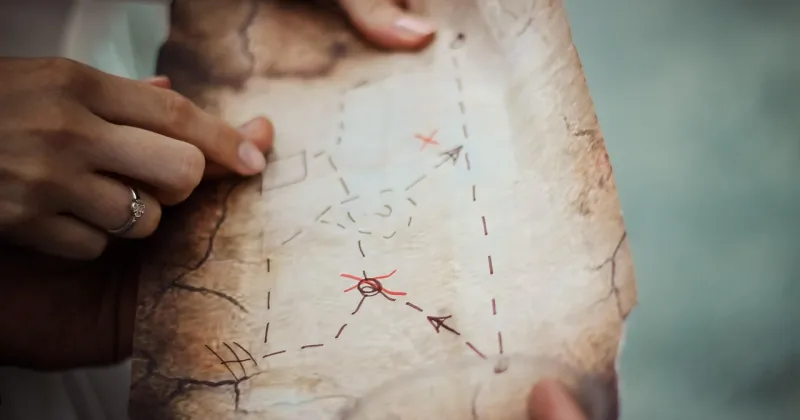
| Directional lock | Up, down, left, right | Arrows, a map route, a maze, a compass, footprints |
| Key padlock | A hidden key | Under, inside and behind things; in a locked box you already opened |
| Color or symbol lock | An order of colors or shapes | Objects arranged in a row, a legend, a stained-glass or flag pattern |
| Hidden switch | No dial at all | Placing an object, a magnet, a pressure plate, a sequence of buttons |
Escape rooms, explained: from your first game to building your own
An escape room is a live puzzle game. A small team is shut in a themed room, usually for about an hour, and has to search it, connect what it finds and solve a chain of puzzles to reach the final goal before the clock runs out. No special knowledge is needed and nothing is truly locked: a game master watches the whole time and can give hints or open the door.
The Final Clue is a guide to that hobby from both sides of the door. Half of what we write helps players get more out of the rooms they book. The other half helps teachers, parents and party hosts build games of their own on a kitchen table. This page shows where everything is.
New to escape rooms? Start here
If you have never played, read what an escape room is first. It covers how a game runs from the briefing to the last lock, what the game master does, how hints work and what happens if you do not finish in time. Then pick up the habits that separate teams that escape from teams that almost do in escape room tips: search properly, say out loud what you find, keep used clues apart from fresh ones and ask for a hint before frustration sets in.
Not sure which room to book? Escape room themes describes the main kinds, from heists and detective stories to horror, and helps you match one to your group. A scary room with a nervous player in the team is a long hour for everyone.
Learn the puzzles before you meet them
Rooms differ in story, but the puzzles inside are built from a familiar toolkit. Knowing the families saves time, because you recognize what a puzzle wants from you instead of staring at it. Escape room puzzles goes through the common types: searching, pattern matching, ciphers, logic grids, physical tasks and puzzles that need two people working at once.
Most answers end at a lock, and each kind of lock wants a different kind of answer. Escape room locks explains number, word, directional and key locks and what to look for with each. For practice between games, try our escape room riddles, which train the sideways thinking that designers like to reward.
Play with the right group
The same room is a different game for a family, a group of friends and a team from work. Escape rooms for kids covers ages, difficulty and how much help adults should give. For colleagues, escape room team building explains what the format is good for and how to brief a group so that the quiet people get to play too. Teams that cannot be in one place can still play: see virtual escape room team building.
Build your own escape room at home
You do not need a commercial venue to enjoy the format. A home game needs a simple story, four or five linked puzzles, a few boxes or bags that can be locked and someone willing to play game master. How to make an escape room at home takes you through the design step by step, from choosing the final goal to testing the game before guests arrive.
Short of ideas? Escape room ideas collects puzzles you can make from paper, string and things already in the house. If you would rather not start from nothing, a printable escape room gives you a ready-made game to print and cut out, and escape room kits compares boxed and downloadable options.
Teachers use the same method to turn revision into a challenge: classroom escape room shows how to fit a game into a lesson and keep thirty pupils busy at once. And for the holidays there is a seasonal version in Christmas escape room.
More games in the same spirit
Escape rooms belong to a wider family of puzzle games, and many of the skills carry over. We are adding guides to scavenger hunts, murder mystery parties, puzzle boxes and brain teasers for the times when you want a game that fits a garden, a dinner table or a rainy afternoon. You will find them in the DIY games, groups and puzzles sections as they are published.
How we write, and what we will not publish
We do not publish walkthroughs or answers to commercial escape rooms. Designers spend months building those puzzles, and a spoiler ruins the game for the next team. Everything here teaches method: how to search, how to think about a lock, how to design a fair puzzle.
The Final Clue is an independent guide. It is not an escape room business, it takes no bookings, and it is not connected with any venue that used this web address in the past. Puzzle examples and printable ideas on the site are our own, and you are welcome to use them for your own games at home or in class.
Sections
- First-Timer Guides & TipsHow escape rooms work, what to expect on your first game, and the habits that get teams out before the clock runs down.
- Puzzles, Locks & CodesThe puzzle types, locks and ciphers you meet in escape rooms, and how to crack each one.
- Room ThemesHorror, zombie, mystery, heist and adventure rooms: what each theme is like, how scary it gets and who it suits.
- Teams & PartiesEscape rooms for team building, birthdays, date nights, families and kids: planning, group size and what makes it work.
- DIY Escape RoomsBuild an escape room at home, in a classroom or for a party: story, puzzles, props and printable ideas.